Choosing a Location for Your Office Build in Boise: What to Evaluate Before You Commit
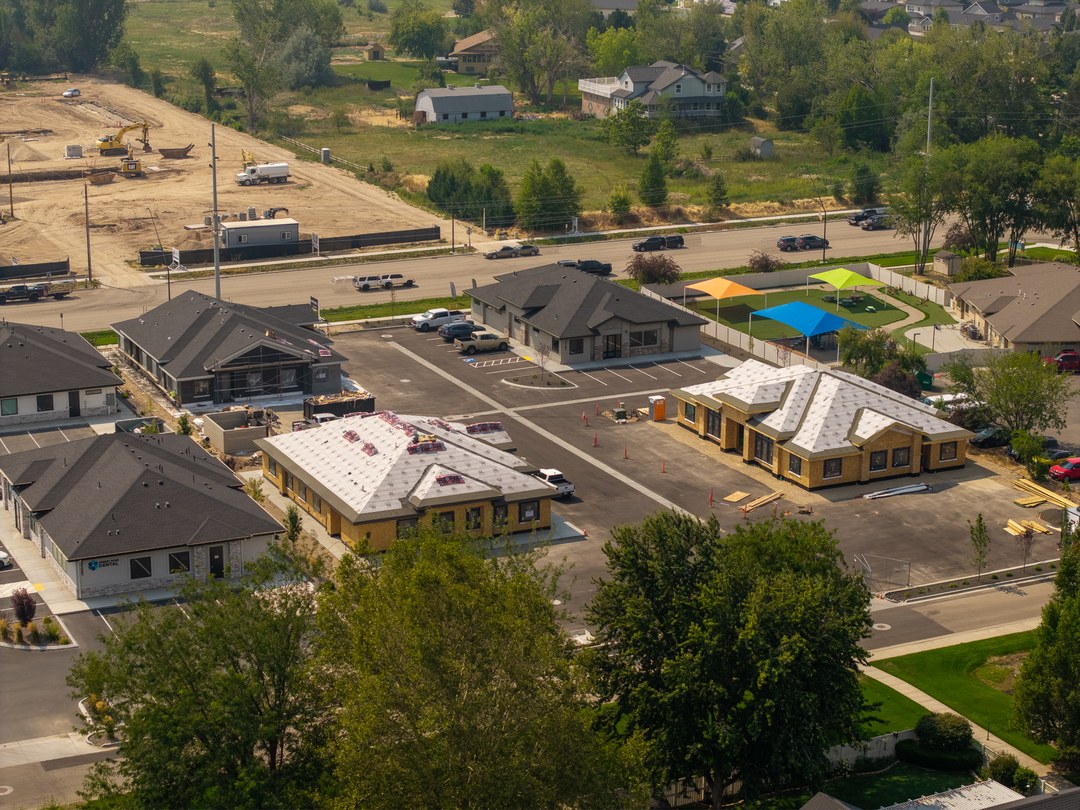
Access and Commute Patterns
Your employees need to reach the building five days a week, and your clients need to find it when meetings matter. Start with traffic patterns during actual commute hours, not midday when roads are clear. A site that looks convenient on a map can sit behind a railroad crossing that closes twice during morning arrival, or require a left turn across heavy traffic with no signal.
Count how many of your team members drive in from Meridian versus downtown. If most of your staff lives west of the interstate and you build east of it, you have added fifteen minutes to every commute. That shows up in retention.
Client access works differently. If you meet with out-of-town visitors, proximity to the airport or hotels along the Connector matters more than being near your staff's neighborhoods. If your clients are local business owners, being near their own offices or on a route they already drive reduces friction.
Utility Capacity and Site Readiness
Not every parcel in Boise has the infrastructure to support a commercial office without expensive extensions. Water, sewer, gas, electricity, and fiber all terminate somewhere, and if your site is beyond that point, you pay to bring them in.
Ask whether the utilities you need are stubbed to the property line or already metered on-site. Extending a sewer main five hundred feet can add six figures to your project before the building pad is even cleared. Electrical service rated for residential neighborhoods may require a transformer upgrade to handle HVAC and server loads for a mid-size office.
Fiber availability deserves separate attention. If your business depends on reliable high-speed internet, confirm which providers serve the address and what speeds they can deliver without a custom build-out. In some parts of Ada County, fiber is at the curb; in others, it is a quarter-mile away and treated as new construction.
Grading and drainage also affect site readiness. A flat lot with minimal slope requires less cut-and-fill than one with dramatic grade changes. Wetlands, floodplains, and high water tables all add time and cost. The county GIS system shows some of this, but a geotechnical survey tells you what is actually beneath the surface.
Zoning and Future Development
Zoning determines what you can build and how much parking you must provide. Office use is permitted in many commercial zones, but setback requirements, height limits, and lot coverage rules vary. A site zoned for light commercial may allow a two-story office with surface parking; one zoned mixed-use might permit four stories but require structured parking or ground-floor retail.
Look at what can be built on the parcels around you. If the lot next door is zoned for industrial use, you may wake up to a concrete plant or trucking depot. If it is zoned residential, you may face pushback from neighbors during the permitting process, even if your project is allowed by right.
Check the city's comprehensive plan and any active area plans. Boise updates its land use maps regularly, and a site that looks stable today may be slated for rezoning or road widening in three years. If a major infrastructure project is planned nearby, it could improve access or create years of construction disruption.
Operating Costs Over Time
Property taxes vary by location and assessed value. A site inside Boise city limits carries a different tax rate than one in unincorporated Ada County, and that difference repeats every year you own the building. Run the numbers on annual property tax, not just purchase price.
Maintenance costs also depend on location. A building surrounded by mature landscaping and shared access roads may split snow removal and grounds upkeep with neighboring tenants. A standalone site on a large lot means you are responsible for plowing, irrigation, and landscaping across the entire parcel.
If you are building in a master-planned development or business park, ask about HOA fees and what they cover. Some include signage, common area maintenance, and stormwater management; others assess fees but provide minimal services. Get the covenants, conditions, and restrictions in writing before you close.
Moving Forward
Choosing a location is not a real estate decision alone—it is a construction decision, an operational decision, and a recruiting decision wrapped together. Before you make an offer, walk the site during rush hour, pull the utility maps, and meet with a builder who knows what it takes to deliver a functional office on that specific piece of ground.